Nervous System Lesson - Brain Worksheet - Elementary Science Lessons & Tests - My Schoolhouse - Online Learning
The central nervous system is made up of the brain, spinal cord,
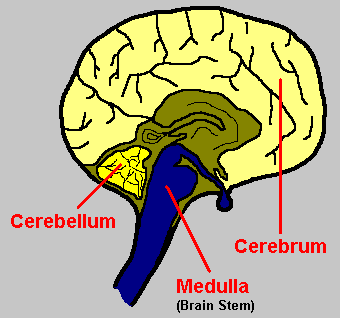
and nerves. The brain has three main parts, the brain stem or
medulla, the cerebrum, and the cerebellum. Each part has a special
job to perform.
The medulla keeps your heartbeat and your breathing
regular.
The cerebellum is in charge of balance and coordinating
all of the muscles. The medulla and cerebellum work all of the time,
even when we don't know it.
The cerebrum controls thinking, moving and
sensing. It is in control when you read a book or play a game.
The spinal cord is a long piece of nerve tissue that
runs from the brain through the backbone. It connects the brain to
the body's nerves. Nerves are tiny fibers that are in the spinal
cord and throughout the entire body. Nerves pick up information and
send it up the spinal cord to the brain. Individual nerves are in
charge of seeing, hearing, smelling feeling, or touching something.
Certain nerves in the spine and brain tell parts of the
body to act really fast. When the body must act very fast in order
to avoid injury, the message from the sensory nerves doesn't go all the
way to the brain before your body takes action. The message travels
from the sensory nerve to the spinal cord and is sent back to a muscle
right away. This quick action is called a reflex. A reflex is
an action we take even before the brain knows about it.
Directions: Answer the questions about the
nervous system.
The nervous system is made up of the
brain, spinal cord and
.
How many main parts does the brain
have?
one
two
three
Which part of the brain keeps your heartbeat and your breathing
regular?
brain stem/medulla
cerebrum
cerebellum
Which part of the brain is in charge of balance and coordinating all of the muscles?
brain stem/medulla
cerebrum
cerebellum
Which part of the brain is in charge
if you are riding your bike?
Which part of the brain controls thinking, moving and
sensing?
brain stem/medulla
cerebrum
cerebellum
The spinal cord connects the
to the body's nerves.
Which part of the brain is in control when you read a book or play a
game?
brain stem/medulla
cerebrum
cerebellum
Which part of the brain is in control
when you are reading your favorite book?
The medulla and the
work all of the time, even when we don't know it.
Individual
are in charge of seeing, hearing, smelling feeling, or touching something.
A quick action made by the body
without the brain knowing about it is called a .