Digestive System Lesson with Worksheet - My Schoolhouse - Online Learning
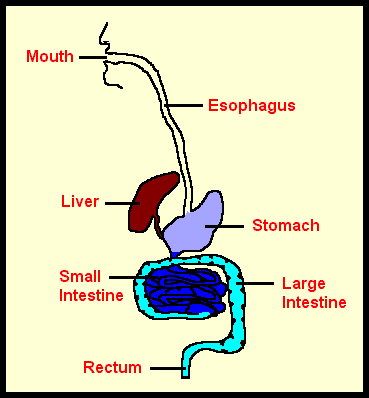
The digestive system begins in your mouth where the tongue and teeth work together to break up the food. A watery liquid
called saliva makes the food wet and soft, and it has a chemical that helps digest the food.
As you swallow the food goes down a tube called the
esophagus. This tube goes into your stomach. The stomach is a
large muscle that stirs up the food. More liquids and chemicals
help digest the food.
After the food has been ground and stirred in the
stomach it moves to the intestines. The intestines are very long and
coiled up. If you stretch them out, they would be longer than you
are tall. Adults intestines are almost twenty-seven feet long.
The narrow part of the intestine is called the small intestine. The
bigger part is called the large intestine.
In the small intestine, the food is mixed with more
chemicals and liquids. The pieces of food become very small; too
small to see. These very small pieces are called nutrients and are
absorbed into the blood. The blood carries these nutrients to all
parts of the body.
Blood passes through the body and goes through another
organ in the digestive system. This organ is called the liver.
It is on the right side of the body near the lowest rib. One job of
the liver is to clean the blood. The liver also sends liquids and
chemicals to the small intestine.
Some of the food is left in the small intestine and
cannot be digested. It is then passed to the large intestine.
It leaves the body through a little hole called the anus when you go to
the bathroom.
The liquids the body does not use are also carried
away. Blood carries good nutrients and waste through the body.
The waste goes through two organs called the kidneys. The kidneys
help clean the blood. The watery liquid not used is called
urine. The urine goes into a little bag called the bladder.
Urine leaves the bladder when it is pushed out of the bladder
through a tube called the urethra.
Directions: Answer the questions to learn about
the digestive system.
Where does the digestive system
begin?
intestines
stomach
mouth
What is saliva?
a watery liquid
a
nutrient
a
waste
What is the name of the tube food
goes down when you swallow?
stomach
intestine
esophagus
The stomach is a large
cell
muscle
intestines
Food leaving the stomach goes to the
intestines
liver
esophagus
About how long is an adult's
intestines?
12 feet
27
feet
2
feet
Where is the liver located?
near the heart
left
side of body
right
side of body
Where does unused food leave the
body?
anus
large
intestine
right
side of body
What is the watery waste not used by
the body called?
intestines
kidney
urine
What do kidneys do?
swallow
digest
clean
the blood
What is the name of the little bag
that holds the urine?
bladder
small
intestine
esophagus
What is the name of the tube urine
leaves the body through?